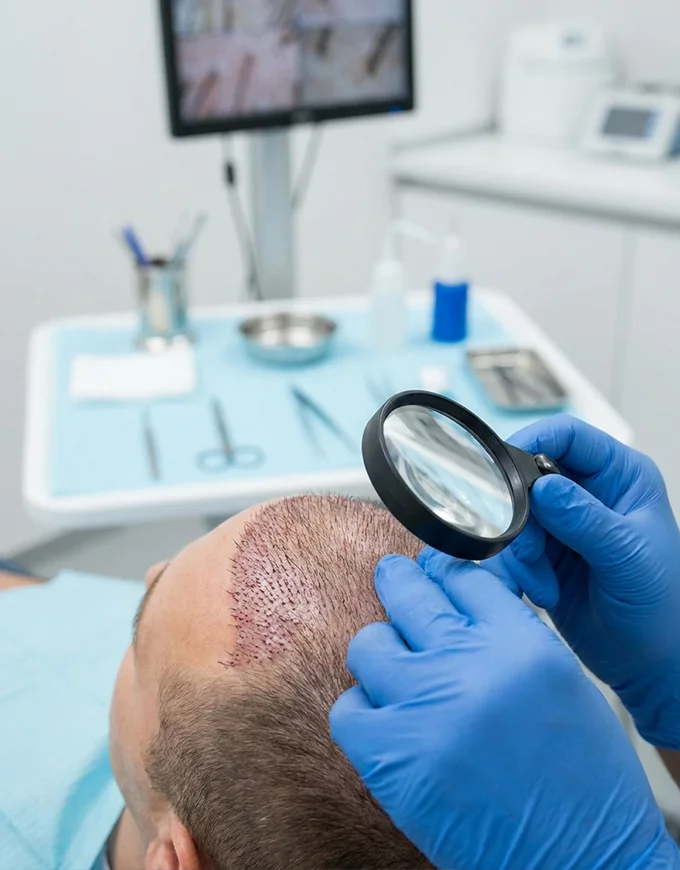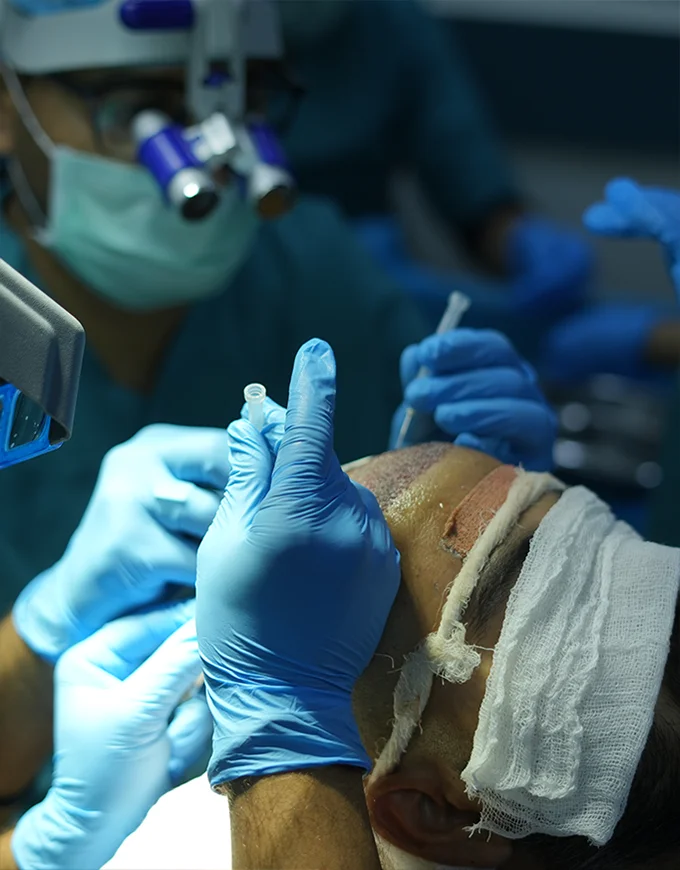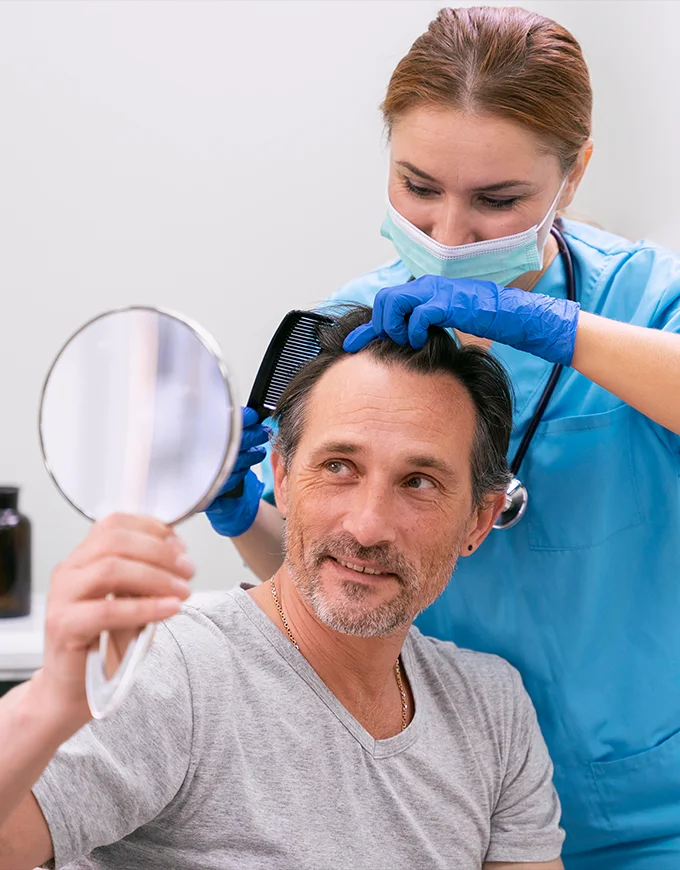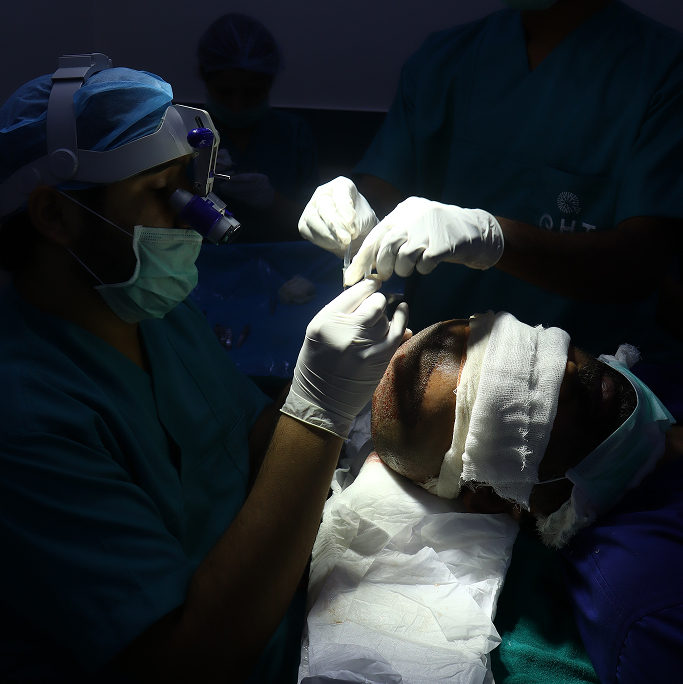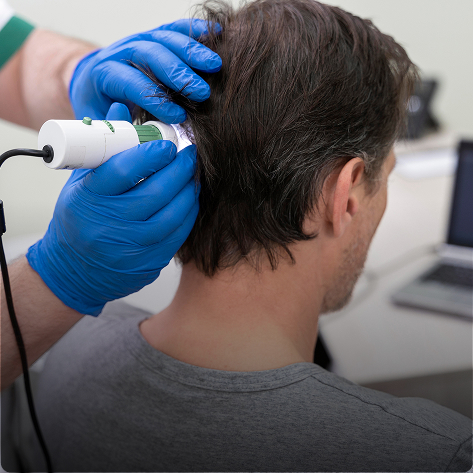


A hair transplant is permanent surgery. Once the grafts settle, the result stays with you for years, so the clinic you choose matters far more than the price on the quote. Many clinics offer a hair transplant in Haridwar at a low cost per graft, yet that number tells you almost nothing about how the hair will look in a year. The points below help you judge a clinic before you book.
Check who actually does the surgery. The procedure should be led by a qualified surgeon, not a technician working without supervision. A hair transplant specialist in Haridwar with real case experience will plan your hairline and handle each graft with more care.
Ask which methods the clinic uses. FUE and QHT give a cleaner recovery than the older strip method for most patients. The right choice depends on your Norwood grade and how much donor hair you have at the back of the scalp.
A fair quote lists every step and every charge. If a clinic gives you one figure on the phone and a higher one after the scalp check, treat that as a warning sign. You should know the graft count and the final cost before surgery day, with the technique fixed in writing.
Recovery is not left to chance at a good clinic. You get aftercare steps in writing, a clear medication schedule, and fixed dates for your follow-up visits.
Hairline design and graft survival depend on the surgeon's skill, not on how close the clinic sits to your home.
A dense patch of hair placed without planning looks obvious from the front. Grafts that follow your own growth direction blend in and hold up to a close look.
No two scalps are the same. A plan built around your hair loss pattern and your donor supply works better than a fixed package sold to everyone.
Some clinics include pre-op checks and a full year of follow-up in one price. That kind of cover usually works out cheaper than paying for each visit on its own.
Hair loss does not pause while you decide. As androgenetic alopecia spreads, the bald area grows and the donor reserve shrinks, which makes later restoration harder and more expensive.
If a salesperson books you and a technician operates on you, the surgeon may never touch your case. Work done this way often looks patchy and needs a second corrective surgery to fix.
The surgery itself is one day. Healing runs over several months, and skipping the aftercare steps can cost you grafts that would otherwise have survived.
An early scalp check is the cheapest step you can take. It lets the surgeon plan grafts while your donor area is still strong. Early androgenetic alopecia treatment in Haridwar also keeps medical options open alongside surgery.
A fixed in-house team performs your surgery the same way every time. Outsourced technicians, hired case by case, add a risk you cannot see on the day.
Know what your current stage of hair loss can deliver. A patient who expects teenage density at Norwood 6 will feel let down, even after a clean surgery.
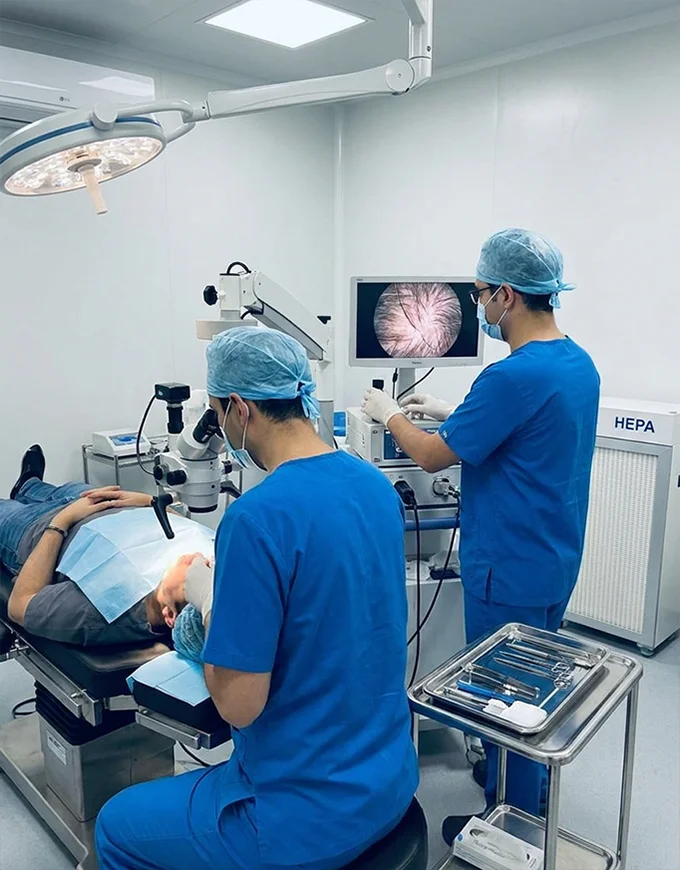
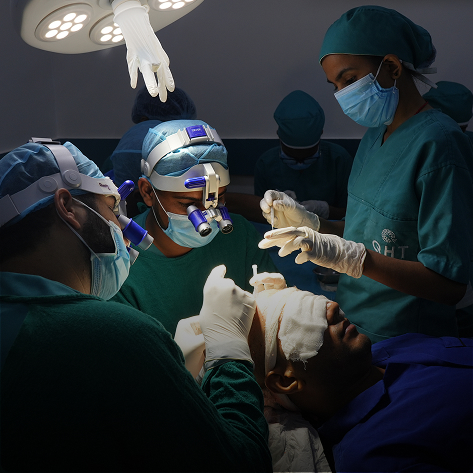
A dedicated operating theatre and proper sterilisation are not extras. They lower the risk of infection and protect the grafts while they are out of the body.
Two patients with the same Norwood grade can book the same hair transplant in Haridwar and still walk out with different results. The outcome rests on a few factors, and most of them are decided before the first graft is taken.
Grafts weaken the longer they stay outside the scalp. QHT's protocol keeps out-of-body time under two hours to limit that loss.
Hair from the back and sides resists DHT, so it keeps growing once moved. Strong donor density covers the bald area without thinning the donor site.
The grade and pattern set the plan. A wider bald area needs more grafts and draws harder on a donor zone that has a fixed limit.
No method fits everyone. The choice between FUE, FUT and QHT depends on your Norwood grade and how much donor hair you have.
A skilled surgeon shapes the hairline to suit your face and age. The same skill keeps grafts healthy during handling, which protects survival.
For years, men in this part of Uttarakhand travelled to Delhi for surgery. A hair transplant in Haridwar itself was hard to find at a clinic you could trust. That has changed. QHT now runs a full hair transplant clinic in Haridwar at Ranipur More, so you can be treated close to home instead of booking travel and a hotel around the procedure. The clinic draws men from Roorkee and Rishikesh, as well as smaller towns across Uttarakhand. It is part of QHT’s wider network, which has treated more than 15,000 patients across India. Every case here is led by a trained surgeon and planned around a natural hairline restoration that fits your face, not a fixed template.
A qualified surgeon handles both the planning and the graft placement, not a technician working without supervision.
Your graft count and target are fixed only after a proper scalp check, so the plan matches your actual case.
Follicles move from extraction to placement quickly, with out-of-body time kept under two hours to limit cell loss.
You get the graft count and final cost in writing before surgery day, with no charges added on later
US FDA Approved Technology
Certified Hair Transplant Surgeons
A hair transplant in Haridwar is not the right first step for everyone with thinning hair. A transplant moves hair you already have, so the result depends on what your scalp can spare. Before any procedure, a surgeon and a dermatologist at QHT check whether the timing and the donor area are right for you.
You are likely a good candidate if you:
It works for men with male pattern loss from Norwood 2 to 7. Women with diffuse thinning or female-pattern loss can be treated too, though the plan and the technique differ.
One case calls for caution. If your hair loss is still spreading quickly, the surgeon may advise waiting. Early androgenetic alopecia treatment in Haridwar, such as medication, can steady the loss first. Surgery then works on a stable base, and the donor area is not spent too soon.
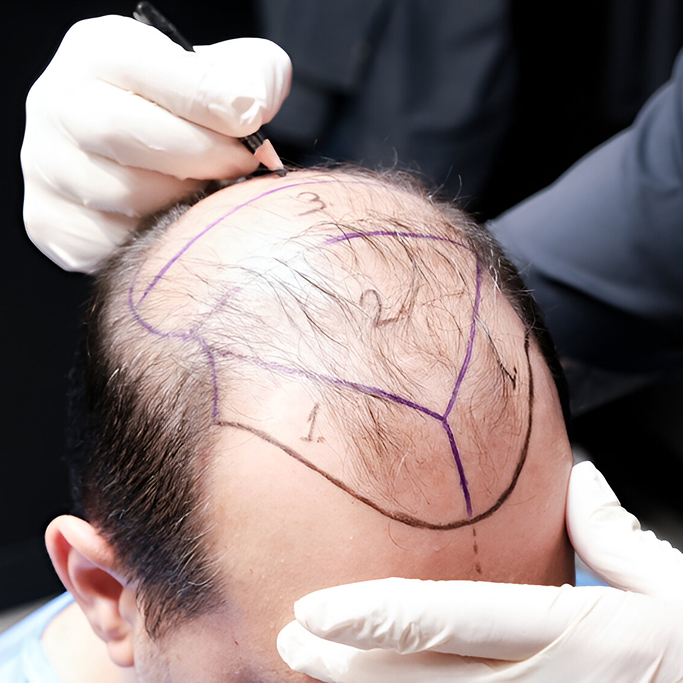
The Norwood scale is the chart surgeons use to grade male pattern baldness. It starts from 1 to 7, where 1 is a full head of hair and 7 is the most advanced loss. Your QHT surgeon notes your grade during the scalp check. That grade gives a first estimate of how many grafts you may need.
| Norwood Grade | Typical Grafts Needed |
| 2 | 800–1,200 |
| 3 | 1,200–1,800 |
| 4 | 1,800–2,500 |
| 5 | 2,500–3,200 |
| 6 | 3,200–4,000 |
| 7 | 4,000–5,000+ |
Note: These counts are a starting estimate. The final number is set after the scalp assessment, since donor density and the area you want covered both change it.
A scalp check at QHT Clinic in Haridwar reads your grade and donor supply, then maps a realistic plan. It is the same first step for surgery or for non-surgical scalp hair loss treatment in Haridwar.
At QHT, no single person runs the whole procedure. The work is split across four stages, each handled by a trained part of the team.
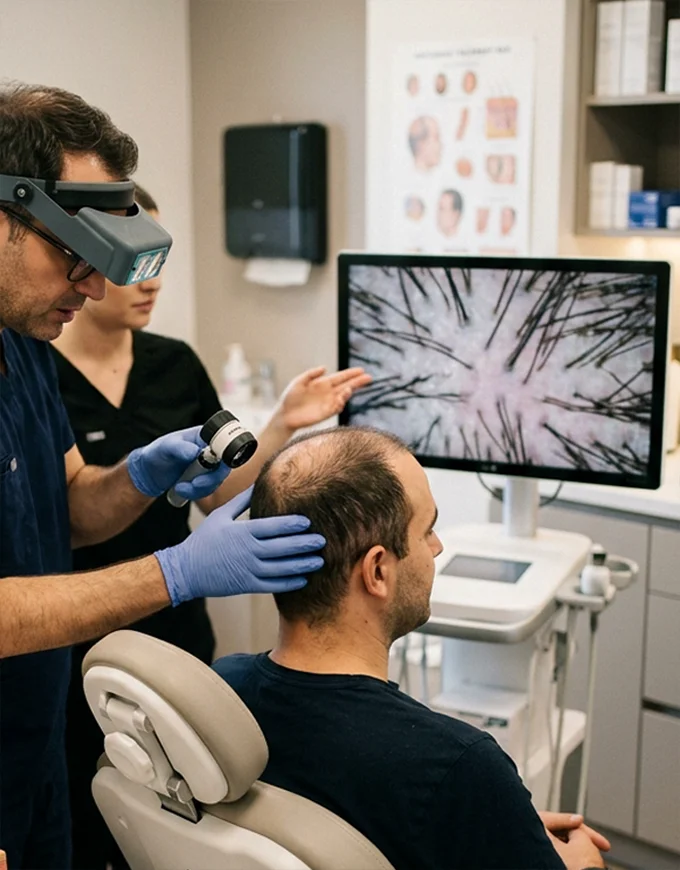
The surgeon checks your donor area while the dermatologist reviews your scalp health. You leave with a clear idea of what is realistic for your case.
The team fixes your graft count against your grade and your goals. A few medical checks follow. You also get your pre-op rules in writing, so nothing is left to memory.
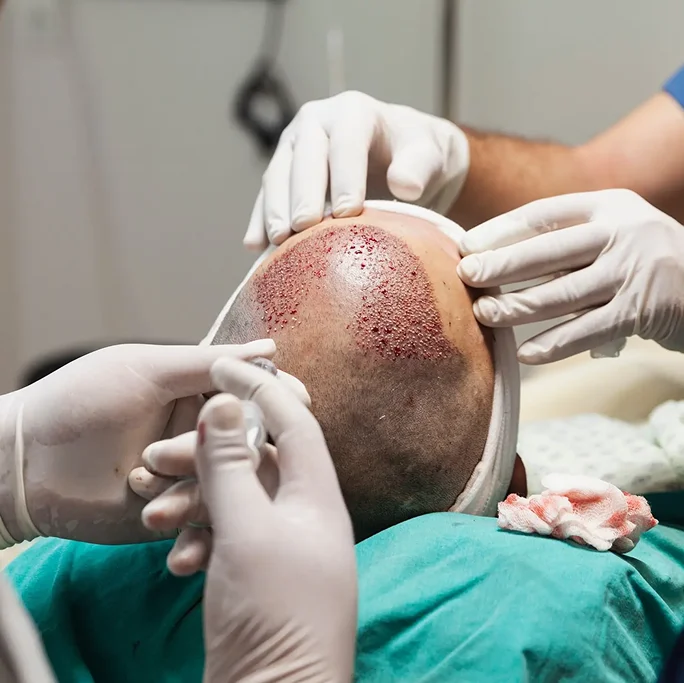
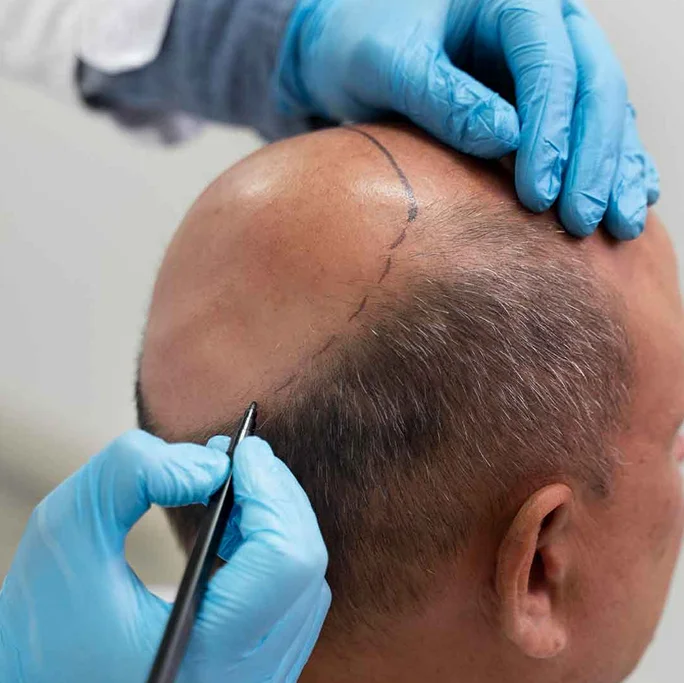
The surgery runs under local anaesthesia, so your scalp is numb while you stay awake. For most patients it is close to a painless hair transplant in Haridwar. The surgeon first draws your hairline, a natural hairline restoration shaped to your face, and starts only after you approve it. Grafts are removed next. Small slits are cut at the natural angle of your hair, and each graft goes in soon after it comes out. You head home the same day with a printed aftercare kit.
Healing is tracked, not left to chance. You get scalp-care steps and a fixed review schedule. Standard checks fall at Day 1, Week 1, then Month 1, 3, 6 and 12.
Recovery after a hair transplant in Haridwar is gradual, and most of it is straightforward with proper care. Many patients are back at light desk work within 7 to 10 days. The table below shows what to expect at each stage.
| Phase | What Happens |
| Day 1–2 | Mild swelling and redness. Sleep with the head raised. Painkillers are prescribed, and the scalp is not washed yet. |
| Day 3–7 | The first wash is done with clinic guidance. Scabs begin to fall off. Many people return to desk work. |
| Weeks 2–4 | The transplanted hair sheds. This shedding is normal and expected. |
| Months 3–6 | New hair starts to come through. |
| Months 9–12 | Final density settles in with a clean hairline. |
QHT Clinic offers three techniques for a hair transplant in Haridwar. The right one for you depends on your Norwood grade and the state of your donor area. How much density you want back also shapes the choice. The tables below show the usual graft range and an indicative cost at each grade. The final figure for any hair graft surgery in Haridwar is set after a scalp check, since donor density and the area to cover change the count.
FUE is the most widely used method in the world. The surgeon removes follicles one at a time with a fine micro-punch, so there is no linear scar and the donor area heals within days. It suits early to moderate loss, roughly Norwood 2 to 5, and works well if you keep your hair short. An FUE hair transplant in Haridwar does need the donor area shaved before the procedure.
FUT is the older strip method, and it stays the cheapest per graft. A thin strip of scalp is taken from the back of the head, then split into individual grafts under magnification. It yields the highest graft count in a single sitting, which helps in advanced cases at Norwood 5 to 7. The trade-off is a thin linear scar, so it suits men who keep their hair a little longer.
QHT is QHT Clinic’s own advanced form of FUE. The difference is timing. Each graft is placed into the bald area soon after it is removed, which keeps out-of-body time under two hours. Less time outside the scalp protects more follicles, so the long-term result tends to look denser. It is a strong choice for higher Norwood grades or anyone who wants thicker coverage with a hairline shaped for the face.
Haridwar is now a trusted place in India for advanced hair restoration. With world-class clinics, a skilled team, and latest techniques like QHT (Quick Hair Transplant) and FUE, individuals in Haridwar can now seek natural, permanent solutions for baldness and thinning hair.
Most clinics that show up for "hair transplant near me" in Haridwar are run out of Delhi, with a thin local page and no theatre in the city. QHT works differently here. The Ranipur More clinic is a real surgical centre, not a booking desk, and it is the local option for a hair transplant in Haridwar. It sits within easy reach of Roorkee, Rishikesh and other towns across the Garhwal belt. If you have searched for a hair transplant in Uttarakhand and kept landing on Delhi addresses, this is the alternative closer to home. Patients from Dehradun are welcome too, though a nearer QHT option may suit them better.
QHT Clinic is trusted by celebrities and social media influencers for their Hair Transplant.
With years of experience in handling cases with advanced FUE technique, QHT Clinic delivers the best outcomes.
Our expert surgeons and methods give natural hairlines and improved density in cases of FUE hair restoration.
QHT Clinic is equipped with the best technology and advanced techniques to yield a seamless experience.
QHT tailors treatment according to individual needs for satisfactory results.
When it comes to hair and self-esteem restoration, QHT Clinic is trusted with expert surgeons and techniques. We have:
Ensures natural results with constant graft survival.
Clear, transparent costs with absolutely no hidden surprises.
Customized treatment plans plus complete after-surgery care.
Expert surgeons with about 10,000+ of successful transplant cases.
Discover treatment plans tailored by our experts and dedicated team, as per your needs and desires.
Reach out anytime or visit us directly for personalized assistance, expert guidance, and seamless support experience.
QHT Clinic, 521, Model Colony, Ranipur More, Haridwar, Uttarakhand.
D -15, Outer Ring Rd, above Federal Bank, Prashant Vihar, Sector 14, Rohini, New Delhi, Delhi, 110085
QHT Clinic Opposite Hotel Park HyattRoad No. 2 Banjara Hills, Hyderabad, Telangana
Nursing Home Bearing plot No 3, Sector 46, Gurugram, Haryana 122022
Yes, the moved hair is permanent. Grafts are taken from the back and sides of the scalp, where the hair resists DHT, the hormone behind pattern baldness. Once placed, these follicles keep growing in their new spot and do not need ongoing medicine to survive. Hair you did not transplant can still thin over time, which is why early planning helps.
That depends on your Norwood grade and the density you want back. As a rough guide, early thinning may need 800 to 1,500 grafts, while advanced loss can run past 4,000. The exact figure is set after a scalp check, not over the phone.
No. The scalp is fully numbed with local anaesthesia before the work begins, so you do not feel the extraction or the placement. You stay awake throughout. Some mild soreness for a day or two afterwards is normal and settles with the prescribed medicine.
Most patients return to light desk work within 7 to 10 days. Redness and scabbing clear in about two weeks. The transplanted hair sheds in the first month, which is expected, and new growth shows from around 3 to 4 months. Full density usually settles by 9 to 12 months.
It is better not to. The first two days bring mild swelling, and the scalp needs gentle handling. Most people take 7 to 10 days off before returning to desk work. Wait three to four weeks before the gym or any outdoor job, and put off long travel for the same period.
QHT is an advanced form of FUE, not a separate surgery. The main change is speed. Each graft is placed soon after it is removed, which keeps out-of-body time under two hours. Less time outside the scalp protects more follicles, so the long-term result tends to look denser than slower FUE workflows.
Yes. Female hair loss usually shows as diffuse thinning or a receding hairline rather than full baldness, so the plan differs from a man’s. QHT treats women with FUE and QHT methods, and medical therapy is often paired with surgery for a better result. A scalp check decides whether surgery is the right step.
They do when an experienced surgeon designs and places the grafts. The hairline is mapped by hand to suit your face, and each graft follows the natural angle and direction of your hair. With proper aftercare, the transplanted hair blends with what you already have and holds up to a close look.